Smart Thermostats and Zoning: What They Actually Do for HVAC Efficiency
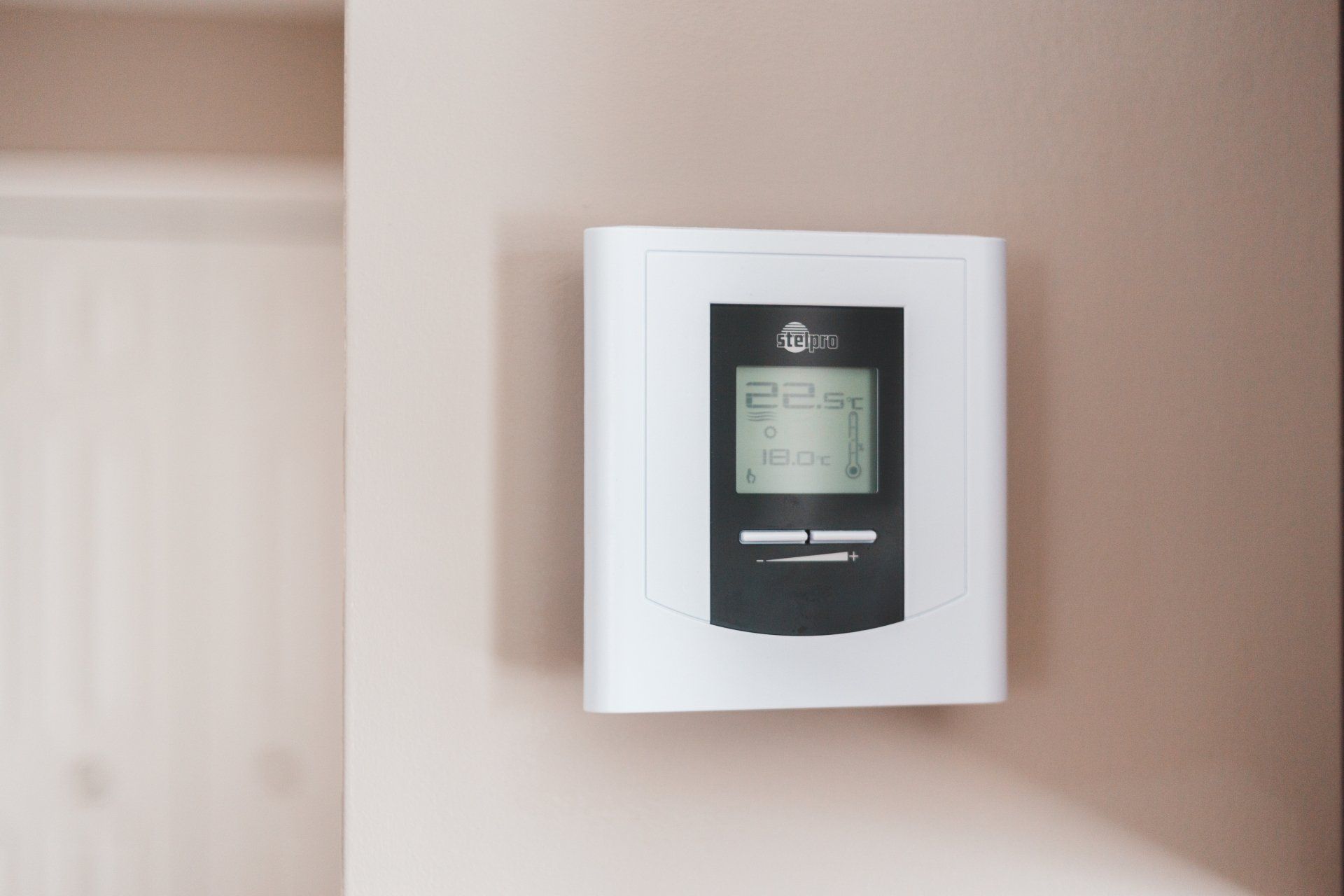
Table of Contents
- Introduction
- A Smart Thermostat Is Not a Zoning System
- What Real Zoning Requires
- Remote Sensors and What They Change
- Where the Savings Actually Come From
- Heat Pump Setback Can Cost You Money
- Summer Setback and Humidity
- The C Wire Problem
- Compatibility Beyond the C Wire
- Learning Thermostats, Schedules, and Geofencing
- Maintenance Alerts and What They Can Tell You
- Choosing One
- When the Thermostat Is Not the Problem
- Conclusion
- Talk Through What Would Actually Fix It
- Frequently Asked Questions
Key Takeaways
- A smart thermostat cannot create zones. It reads one temperature and controls one system, and no feature changes where the air goes.
- Real zoning requires motorized dampers in the ductwork, a zone control panel, and a thermostat per zone.
- Remote sensors change when the system runs, not where air is delivered. Prioritising a hot bedroom makes the system run longer and overcool everywhere else.
- On a heat pump, deep overnight setback triggers auxiliary electric heat during recovery, which often costs more than the setback saved.
- In a humid climate, aggressive summer setback lets indoor humidity climb, and removing moisture takes longer than removing heat.
- Most installation problems come down to the C wire, which supplies continuous power and is missing in many older homes.
- If one room is always uncomfortable, that is a ductwork or load problem and a thermostat will not solve it.
Introduction
A smart thermostat improves efficiency by running your system on a better schedule, letting you adjust it remotely, and showing you data about how it actually operates. What it does not do is create zones, because a thermostat reads temperature at one point on one wall and controls one system, and no software feature changes where the conditioned air ends up.
That distinction matters because it is the most common misunderstanding about these devices and it leads people to spend money on the wrong solution. If your upstairs bedrooms run hot and the living room is comfortable, a smart thermostat will not fix it. The air is going where the ductwork sends it, and a different thermostat does not redirect it.
None of which makes them a poor purchase. Well used, a smart thermostat genuinely reduces runtime, catches problems early, and takes the guesswork out of scheduling. The savings are real, they just come from somewhere other than zoning.
What follows covers what these devices actually do, what real zoning requires, the two setback mistakes that cost money in this climate specifically, and how to tell whether your comfort problem is a thermostat problem at all. If it turns out not to be, that usually points toward equipment or ductwork rather than controls, and HVAC installation decisions are where those problems are solved.
A Smart Thermostat Is Not a Zoning System
Worth stating plainly because the claim appears constantly.
What a thermostat does. It measures the temperature at its own location, compares that to a setpoint, and tells the system to run or stop. That is the entire function. A smart thermostat does the same thing with better scheduling, a nicer interface, remote access, and data logging.
What it cannot do. Send more air to one room and less to another. Hold the bedrooms at seventy while the living room sits at seventy four. Compensate for a room that is hot because it has three windows facing west.
Why people believe otherwise. Marketing language uses the word zones loosely, and remote sensors get described as zoning when they are something different. The result is a homeowner who buys a smart thermostat to fix an uneven house and is disappointed.
One thermostat, one system, one temperature reading. Everything else the device does is scheduling and information.
What Real Zoning Requires
If you actually want different temperatures in different parts of the house, here is what that involves.
Motorised dampers installed in the ductwork, which open and close to direct airflow toward the zones calling for conditioning.
A zone control panel that receives calls from multiple thermostats and operates the dampers and the equipment accordingly.
A thermostat in each zone, since each zone needs its own temperature reading.
A bypass arrangement or variable capacity equipment. This is the part that gets overlooked. When most dampers close, the same volume of air is being pushed through a smaller opening, which raises static pressure and can damage equipment. Older systems handle this with a bypass duct. Modern variable speed equipment handles it by reducing output, which is the better solution.
Ductwork that can be zoned at all. A trunk and branch layout with a clear division between upstairs and downstairs zones easily. A system where every branch comes off one plenum in the same place does not.
Realistically: zoning is a retrofit project involving duct modification, and it makes most sense at the point of a system replacement rather than as a standalone upgrade.
The alternative worth considering. A ductless mini split serving the problem area is frequently cheaper than zoning an existing duct system, and it gives genuinely independent control of that space. For a bonus room, a converted attic, or an addition, that is usually the better answer.
Remote Sensors and What They Change
The feature closest to zoning, and worth understanding precisely.
What they do. A wireless sensor placed in another room reports its temperature to the thermostat. Depending on the model and settings, the thermostat can average several rooms, prioritise a specific room, or switch between them on a schedule.
What that changes. Which temperature the system is trying to satisfy. It changes when the equipment runs.
What it does not change. Where the air goes. The dampers, if any, do not move. The supply registers deliver the same volume they always did.
The tradeoff people discover afterward. Suppose the master bedroom runs hot and you set the thermostat to prioritise its sensor overnight. The system now runs until that bedroom is satisfied, which means it keeps running after the rest of the house has already reached temperature. You get a comfortable bedroom and an overcooled living room, and the equipment runs longer than it otherwise would.
Where sensors genuinely help: when the thermostat itself is in a bad location. A thermostat on an interior hallway wall, or near a supply register, or in direct sun reads a temperature that is not representative of the living space. A sensor in a room people actually occupy fixes that, and it is a real improvement.
Where they do not help: a room that is uncomfortable because of insulation, solar gain, duct sizing, or distance from the air handler. The sensor tells the system the room is hot. It does not give the system any new way to cool it.
Where the Savings Actually Come From
Setting expectations correctly, since the savings are real but they come from specific mechanisms.
Not running the system when nobody is home. The largest single contributor. A schedule that actually matches occupancy, or geofencing that detects when the house empties.
Not running it at full effort overnight. With caveats for heat pumps, covered below.
A schedule you actually keep. Programmable thermostats have existed for decades and most were never programmed, or were overridden constantly. Smart thermostats save energy largely by removing the friction that stopped people from using the programmable ones.
Better temperature control. Some smart thermostats maintain a tighter band around the setpoint than an old mechanical stat, which reduces overshoot.
Data. Runtime reports show you how many hours the system actually ran, which is genuinely useful for spotting a developing problem or evaluating whether an upgrade paid off.
What does not produce savings: buying the device and leaving it on a constant temperature. The hardware saves nothing on its own. The behaviour it enables is what saves.
Heat Pump Setback Can Cost You Money
The most expensive mistake with a smart thermostat in this region, and one the standard advice actively encourages.
Heat pumps are common across north Alabama because winters are mild enough that they work well. They also behave differently from a furnace in a way that matters here.
A furnace produces heat at full output whenever it runs. Setting back ten degrees overnight and recovering in the morning saves money straightforwardly.
A heat pump moves heat rather than producing it, and it does so at a steady, moderate rate. When it cannot recover quickly enough, it calls on auxiliary heat, which is electric resistance elements. Those are dramatically more expensive to run than the heat pump itself.
So a deep setback backfires. Drop the temperature eight degrees overnight and the morning recovery is a large demand that the heat pump alone cannot meet quickly, so the auxiliary heat engages. The cost of that resistance heat frequently exceeds what the setback saved.
What to do instead:
- Keep setbacks shallow on a heat pump, commonly two to three degrees rather than eight to ten.
- Recover gradually. Set the schedule to begin recovery earlier rather than asking for a rapid rise.
- Use a thermostat that understands heat pumps. Better models have adaptive or intelligent recovery that calculates when to start and how to avoid triggering auxiliary heat. This is a genuine reason to buy a specific model rather than the cheapest one.
- Watch for an auxiliary heat indicator. If your thermostat shows aux heat running frequently in mild weather, something is wrong, either the schedule or the equipment.
Emergency heat is not the same as auxiliary heat and should not be used as a routine setting. It bypasses the heat pump entirely and runs on resistance heat alone, which is the most expensive way to heat a house.
Summer Setback and Humidity
The second climate specific issue, and it is the mirror image of the first.
Cooling removes both heat and moisture, at the same coil, and moisture removal requires runtime.
Letting the house drift up while you are out means indoor humidity climbs along with the temperature. When the system restarts, it brings the temperature down relatively quickly and the humidity down slowly, because latent removal takes longer than sensible cooling.
The result is a house that reads the right temperature on the thermostat and feels cool and clammy, which is less comfortable than a slightly warmer, drier house.
In a humid climate this is a real constraint on setback strategy. Modest setbacks of a few degrees are fine. Large setbacks over long absences take longer to recover from than people expect, and the recovery is not just about temperature.
Practical approach:
- Keep summer setback moderate rather than aggressive.
- Start recovery earlier rather than asking for a rapid drop when you walk in.
- Watch the humidity reading if your thermostat displays one, and treat it as a comfort indicator alongside temperature.
- On long absences, avoid letting the house sit at a very high setpoint for days, since moisture accumulates in furnishings and materials and takes real time to come back out.
If the house never feels dry regardless of setpoint, that is a humidity problem rather than a thermostat problem, and lowering the temperature to compensate is an expensive workaround. Long term, that points toward equipment sizing or whole home dehumidification rather than a control setting.
The C Wire Problem
The most common installation obstacle, and the original guidance covers it with the single word compatibility.
What it is. The C wire, or common wire, supplies continuous low voltage power to the thermostat. Smart thermostats need constant power for their displays, wifi radios, and sensors. Older mechanical and basic digital thermostats did not, so many homes have no C wire run to the thermostat location.
How to check. Pull the existing thermostat off its base and look at the terminals. Common labels are R, W, Y, G, and C. If nothing is landed on C, you may not have one.
Options when it is missing:
- A spare wire in the bundle. Many thermostat cables have unused conductors. If one runs all the way back to the air handler, it can be connected at both ends. This is the cleanest solution.
- A power extender kit, which some manufacturers include. It installs at the air handler and multiplexes power over the existing wires. Works well, adds a component in the equipment.
- Running a new cable, which is the most thorough approach and the most labour.
- A battery powered model, which avoids the issue and gives up some functionality.
What not to do: connect the C terminal to something that is not a common wire. Miswiring at the thermostat can damage the control board on the equipment, which is a far more expensive problem than the thermostat.
If any of this is unclear, it is a short service call rather than a project.
Compatibility Beyond the C Wire
Other things worth confirming before purchase.
System type. Conventional gas furnaces with AC, heat pump with auxiliary heat, dual fuel, multi stage equipment, or communicating systems all have different requirements. Heat pumps in particular need a thermostat that supports reversing valve control and staged auxiliary heat.
Communicating systems. Some manufacturers use proprietary communicating controls where the thermostat and the equipment talk over a data bus. These generally require the manufacturer's own thermostat, and a third party smart thermostat may not work at all or may work only in a reduced mode.
Multi stage and variable capacity equipment. A thermostat that only supports single stage operation will run two stage equipment as if it were single stage, giving up much of what you paid for.
Zoning panels, if you already have zoning, need thermostats compatible with the panel.
Line voltage systems, such as electric baseboard, need a different category of thermostat entirely.
Humidifier and dehumidifier control, if you have accessory equipment, needs terminals for it.
The reliable way to check: the model and serial numbers of your equipment, plus a photograph of the existing thermostat wiring, answers nearly all of this in one conversation.
Learning Thermostats, Schedules, and Geofencing
Three approaches to the same goal, and they suit different households.
Learning thermostats observe your adjustments over the first weeks and build a schedule from them. They work well for households with consistent routines and less well for irregular ones, where the thermostat learns a pattern that does not exist.
Manual schedules are more predictable and require you to set them. If your week is genuinely consistent, this is often the better choice and it removes the frustration of a device guessing wrong.
Geofencing uses phone location to detect when the house is empty or when someone is on their way home. Effective for irregular schedules. Depends on everyone in the household having the app active, and it can be unreliable in edge cases.
A practical combination: a sensible baseline schedule plus geofencing as an override for unusual days.
One tip that matters: resist overriding constantly in the first weeks of a learning thermostat, because every override teaches it something. If the schedule is wrong, edit the schedule rather than adjusting the temperature repeatedly.
Maintenance Alerts and What They Can Tell You
Genuinely useful, and worth understanding what the alerts are based on.
Filter reminders are usually time or runtime based rather than sensing actual restriction. They are a prompt rather than a measurement, and runtime based reminders are the more meaningful of the two.
Runtime data is the real value. If your system used to run four hours on a given day and now runs six for the same conditions, something has changed. That is early warning you would not otherwise have.
Temperature differential. Some models track how quickly the house responds, which reflects system performance.
Alerts for extremes, such as the house getting unusually cold while you are away, which catches a failure before pipes are at risk.
Humidity readings where available, which are useful for the reasons covered above.
What they do not do. A thermostat does not measure refrigerant charge, airflow, electrical draw, or combustion. It notices that something has changed and cannot tell you what. The alerts are a prompt to schedule HVAC maintenance, not a substitute for it.
Choosing One
Start with your system type. Heat pump owners should filter on heat pump support with intelligent recovery before considering anything else. This matters more than any other feature in this region.
Then the C wire situation, since it determines whether installation is simple or involves additional work.
Then features, honestly assessed:
- Remote access is the feature almost everyone uses.
- Scheduling in whichever form matches your household.
- Remote sensors if your thermostat is badly located, with realistic expectations about what they fix.
- Humidity display which is worth more in this climate than in a dry one.
- Runtime reporting for the early warning value.
- Smart home integration if you already have a platform.
On budget. The gap between an entry level smart thermostat and a premium one is mostly sensors, learning behaviour, and interface. For a heat pump owner, spending up for proper adaptive recovery is likely to pay for itself. For a gas furnace with a simple schedule, the cheaper models cover most of the value.
Utility rebates are sometimes available on qualifying models, so it is worth checking before purchasing.
When the Thermostat Is Not the Problem
The most useful section for anyone whose real issue is comfort rather than control.
Signs a thermostat will not fix it:
- One room is always uncomfortable while the rest of the house is fine. This is duct sizing, duct leakage, insulation, or solar gain.
- Upstairs is always hotter than downstairs in summer. Heat rises, and a single system delivering equal air to both floors will never balance them. This needs zoning, duct modification, or supplementary equipment.
- The house is cool but feels damp. Humidity problem, frequently caused by oversized equipment.
- The system short cycles, turning on and off frequently. Oversizing, airflow restriction, or a control issue.
- Rooms far from the air handler underperform. Duct length, sizing, or leakage.
- Bills are high and the system runs constantly. Undersized or failing equipment, or an envelope problem.
Uneven temperatures across a house are the most common complaint, and they are almost never solved at the thermostat. The causes of uneven cooling and what actually addresses them are worth understanding before spending on controls that cannot reach the problem.
Conclusion
Smart thermostats are worth having. They save money by running your system on a schedule that matches how you actually live, they let you adjust remotely, and their runtime data gives you early warning of developing problems. Those are real benefits.
What they do not do is create zones. One thermostat reads one temperature and controls one system, and remote sensors change when the equipment runs rather than where the air goes. If different parts of your house need different temperatures, that requires dampers, a zone panel, thermostats in each zone, and equipment that can handle reduced airflow, or a separate system serving the problem area.
Two settings matter more than anything else in this climate. On a heat pump, keep setbacks shallow and let recovery happen gradually, because a deep overnight setback triggers auxiliary electric heat that usually costs more than the setback saved. And in summer, keep setbacks moderate, because letting humidity climb while you are out means the house comes back cool before it comes back dry.
Talk Through What Would Actually Fix It
If your house is uneven, or one room has never been comfortable, the useful first question is whether the problem is control, airflow, or capacity, because the three have different answers and only one of them is a thermostat. That is quicker to establish by looking at the system and the ductwork than by trying products. You can get in touch or call (256) 572-9630.
Serving Guntersville, Albertville, Boaz, Horton, Fort Payne, and Blount County.
Frequently Asked Questions
Can a smart thermostat create zones in my house?
No. It reads one temperature and controls one system, and no feature changes where air is delivered. Real zoning needs motorised dampers, a zone control panel, and a thermostat in each zone.
Do remote sensors fix a hot bedroom?
They change which room the system tries to satisfy, not how much air that room receives. Prioritising a hot bedroom makes the system run longer and overcool the rest of the house rather than solving the underlying cause.
Should you set back a heat pump at night?
Only shallowly, around two to three degrees. Deep setbacks force auxiliary electric heat during recovery, which often costs more than the setback saved. Choose a thermostat with adaptive recovery designed for heat pumps.
What is a C wire and do I need one?
It supplies continuous power to the thermostat, and most smart models require it. Check whether your existing thermostat has a wire on the C terminal. Options include using a spare conductor, a power extender kit, or running new cable.
Related Posts