What Causes an Air Conditioner to Freeze Up in Guntersville, Alabama's Summer Heat?
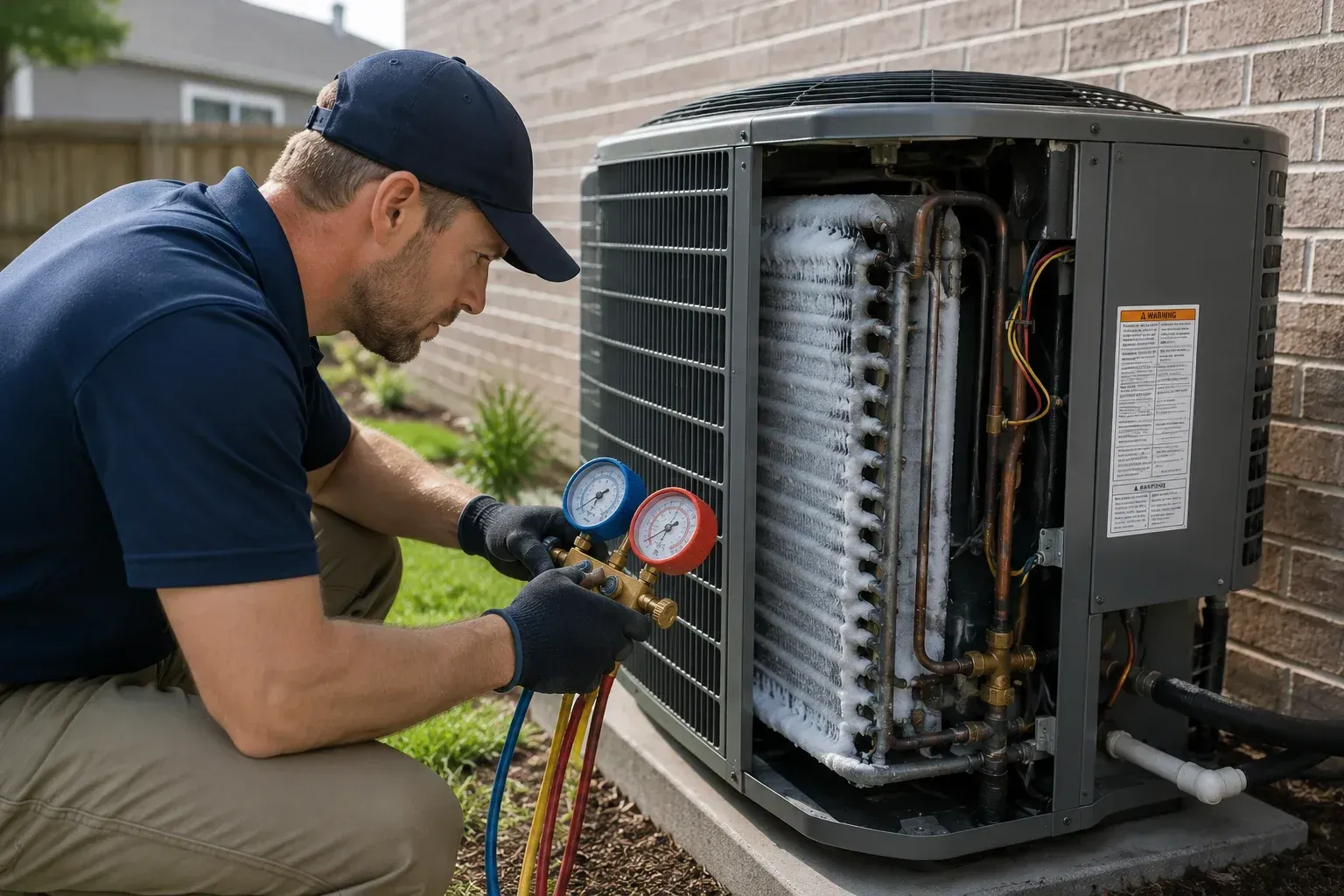
Table of Contents
- Introduction
- Why Your AC Freezes Up During Summer Heat
- Low Refrigerant — A Common Culprit
- Airflow Problems That Lead to Freezing
- Maintenance Issues Contributing to Frozen Coils
- How to Spot a Frozen Air Conditioner
- What Happens When AC Coils Freeze
- Prevention Steps for Guntersville Homeowners
- Conclusion
- Frequently Asked Questions
Key Takeaways
- AC units freeze up when indoor coils get too cold, usually from airflow problems or refrigerant issues.
- Dirty air filters are one of the most common causes and the easiest to prevent.
- Frozen AC coils reduce cooling power and can damage your compressor if ignored.
- Low refrigerant levels require professional diagnosis and repair, not DIY fixes.
- Regular maintenance catches freeze-up problems before they damage your system.
Introduction
AC units freeze up when the evaporator coil temperature drops below freezing, even during summer heat. This happens because refrigerant circulating through the coil gets too cold, and moisture in the air condenses and freezes on the coil surface.
This problem matters to Guntersville homeowners because summer heat makes AC systems work harder, and frozen coils force your air conditioner to shut down entirely. When your AC stops working on a hot day, your home gets uncomfortable quickly. Understanding what causes freezing helps you prevent expensive repairs and keep cooling running when you need it most.
Freezing problems might seem strange when temperatures outside are 85–90 degrees, but they happen more often than many people realize. The good news is that most causes are preventable with basic awareness and maintenance.
Why Your AC Freezes Up During Summer Heat
The logic behind AC freezing seems backwards — how can an air conditioner freeze up when it's hot outside? The answer lies in how air conditioning systems work.
Your AC system pulls warm air from inside your home through return vents. This air passes over a cold evaporator coil that contains refrigerant. The refrigerant absorbs heat from the air, cooling it before it returns to your home. During this process, the coil gets extremely cold — often 30–40 degrees or colder.
When the coil temperature drops too low, the moisture naturally present in your home's air starts to freeze on the coil surface. Once ice builds up, it blocks airflow over the coil. This creates a cycle where less air reaches the coil, the coil gets even colder, and more ice forms. Eventually, enough ice accumulates that your AC system shuts down because it can't move air properly.
The outdoor heat has nothing to do with whether the indoor coil freezes. The coil freezes because its temperature is far colder than the dew point of the air passing over it.
Low Refrigerant — A Common Culprit
Refrigerant is the fluid that circulates through your AC system and absorbs heat from your home. The amount of refrigerant in your system stays constant — your AC doesn't use refrigerant like a car uses gasoline. The same refrigerant cycles through your system repeatedly.
When refrigerant levels drop, the remaining refrigerant expands as it moves through the system, dropping to extremely low temperatures. This abnormally cold refrigerant causes the evaporator coil to freeze up.
Refrigerant leaks are the only reason refrigerant levels drop. A refrigerant leak typically comes from a small hole or crack in the copper tubing connecting your indoor and outdoor units, a loose fitting, or a crack in the coil itself.
Low refrigerant does more than cause freezing. It also reduces your air conditioner's cooling ability. You might notice your AC running constantly but not cooling your home adequately. That constant running without proper cooling is actually a warning sign that something is wrong.
Checking refrigerant levels requires specialized equipment. This is professional work, not something to attempt yourself. A certified technician can locate the leak source and determine whether fixing the leak and refilling refrigerant makes sense for your system's age and condition.
Airflow Problems That Lead to Freezing
Restricted airflow is the number one reason AC coils freeze up. When air doesn't flow properly over the evaporator coil, the coil can't transfer its extreme cold to the air. Instead, the cold builds up on the coil surface, and ice forms.
Dirty Air Filters. Your AC system pulls return air through a filter before that air reaches the evaporator coil. A clogged filter blocks airflow like a plug. Most homeowners should change their filter every 1–3 months depending on pets, allergies, and dust levels in their home. Dirty filters are the easiest freeze-up cause to prevent — it costs a few dollars to replace a filter and takes minutes.
Blocked Vents and Returns. Supply vents that push cooled air into rooms or return vents that pull air back to your system can get blocked by furniture, curtains, or closed doors. Closing multiple vents forces the system to work harder, reducing overall airflow. Keep vents clear and avoid blocking return air vents with large furniture or storage.
Dirty Evaporator Coil. Over time, dust and dirt accumulate on the evaporator coil itself. This buildup reduces the coil's ability to transfer heat from the air. The coil gets colder to compensate, and ice forms more easily. Professional cleaning removes this buildup, and many technicians include coil cleaning as part of annual maintenance. For systems in dusty homes or areas with high pollen, more frequent cleaning might be necessary. You can learn more about maintaining proper ventilation for air quality, which also supports better AC function.
Maintenance Issues Contributing to Frozen Coils
Regular maintenance prevents most AC freezing problems. Systems that receive professional tune-ups rarely develop freezing issues.
Neglected systems often develop problems gradually. A small refrigerant leak doesn't cause immediate freezing - it gets worse over weeks or months. A filter that's getting clogged doesn't stop airflow overnight — it happens slowly. By the time you notice your AC isn't working well, multiple issues might be developing.
Seasonal maintenance catches these problems early. A technician checks refrigerant pressure during spring maintenance and catches a leak before it causes freezing. They verify airflow is adequate and catch filter problems during inspection.
Many homeowners skip maintenance because they think their AC is working fine. Maintenance isn't just about fixing broken things — it's about preventing problems from developing in the first place. Understanding the value of seasonal maintenance benefits helps justify the small investment before major problems occur.
How to Spot a Frozen Air Conditioner
Frozen coils aren't always obvious. If you see ice on the outdoor unit on a hot day, your system is definitely frozen. But sometimes the problem is less visible.
Listen to your AC system. If it's running continuously but your home isn't getting cooler, something's wrong. Feel the air coming from your vents — if it's warm or only slightly cool, the system might be failing due to frozen coils.
Check your return air vents. If there's little or no air coming back to the system, airflow is restricted. Look at your air filter through the return vent — if you can barely see light through it, the filter needs replacing immediately.
Feel the copper tubing connecting your indoor and outdoor units if you can access it safely. If the tubing feels uncomfortably cold to touch, refrigerant pressure is abnormally low.
These signs don't automatically mean your coils are frozen, but they indicate your system isn't working properly and needs professional evaluation.
What Happens When AC Coils Freeze
Beyond the obvious problem of no cooling, frozen coils damage your system over time. When ice builds up on coils, it melts slightly as it forms. This water runs back to your system's drain line. Excessive water can overwhelm the drain capacity, causing water to back up and damage your indoor unit — and potentially leak into electrical components, creating shorts and component failure.
The compressor — the most expensive part of your AC system — works much harder when coils are frozen. It tries to pump refrigerant through a system where ice is blocking normal circulation. This extra strain heats up the compressor and causes premature failure. A failed compressor usually means replacing your entire outdoor unit, a $2,000–$3,000+ repair.
Leaving frozen coils alone costs money. Fixing the underlying problem immediately saves you from expensive compressor damage.
Prevention Steps for Guntersville Homeowners
Change Your Air Filter Regularly. Mark your calendar to check your filter monthly. If it looks dirty, change it. This simple step prevents airflow problems that lead to freezing.
Maintain Clear Airflow. Keep return vents unblocked. Don't pile boxes or furniture in front of them. Keep supply vents clear so air can flow into rooms. Don't close more than one or two vents permanently.
Schedule Spring Maintenance. Have a professional technician inspect your system before summer cooling season starts. They'll check refrigerant pressure, clean the coil, verify airflow, and catch developing problems before you need heavy cooling. You can also read about filter change importance for additional guidance.
Watch for Warning Signs. If you notice your AC running constantly without good cooling, contact a technician promptly. Catching problems early prevents freeze-up and expensive damage.
Avoid Temporary Fixes. Don't pour water on frozen coils to melt ice, and don't try to recharge refrigerant yourself. These temporary solutions miss the underlying problem and can damage your system further. Professional diagnosis identifies the real cause.
Conclusion
AC freezing during hot weather seems illogical, but it's a common problem that happens when coils get too cold due to low refrigerant, restricted airflow, or maintenance issues. The good news is that most causes are preventable.
Dirty air filters are the easiest problem to solve — change them regularly. Refrigerant leaks require professional repair but can be caught early with maintenance. Airflow restrictions can be prevented by keeping vents clear and maintaining your system properly.
Understanding what causes freezing helps you recognize problems early and prevent expensive repairs. Your air conditioner should cool your home reliably all summer long. When it's not working right, addressing it quickly keeps minor issues from becoming major damage.
Next Steps
If you're unsure whether your AC system is working properly or if you've noticed signs of freezing, talking with a professional helps clarify what's happening. A technician can assess your system's condition, identify any developing problems, and explain what maintenance or repairs make sense.
This conversation should be straightforward — an evaluation of your current situation without pressure to decide anything immediately. The goal is understanding what's happening so you can make informed decisions about your system's care.
Frequently Asked Questions
No, you should not attempt to fix a frozen AC coil yourself. Melting ice with water risks electrical damage. Trying to refill refrigerant without finding the leak causes the same problem to happen again. Professional diagnosis identifies the actual cause — whether it's a refrigerant leak, airflow problem, or maintenance issue — and fixes it properly.
Freezing often depends on system conditions that vary day to day. A refrigerant leak might not cause immediate freezing on mild days, but when your AC runs harder on hot days, pressure drops further and freezing occurs. Similarly, a clogged filter restricts airflow gradually, and freezing might happen only after airflow becomes severely restricted.
Running your system with a frozen coil causes damage. You shouldn't intentionally run it this way. Once you notice freezing — poor cooling, ice on the outdoor unit, constant running without adequate cooling — turn the system off and call a technician. Continued operation strains the compressor and risks expensive damage.
No, low refrigerant alone doesn't require system replacement. A technician must find and repair the leak, then refill refrigerant to proper levels. Older systems might not be worth extensive repair, but the decision depends on the leak location, repair cost, and your system's age. A professional evaluation determines what makes sense for your situation.
Yes, maintenance prevents most AC problems including freezing. Annual spring maintenance catches refrigerant leaks early, ensures proper airflow, and identifies developing issues. This small investment prevents freeze-ups and extends your system's life.
Your AC system contains a sealed amount of refrigerant — it doesn't get used up like gasoline. Low refrigerant only happens because refrigerant leaked out. Either way, the problem is the leak itself, not just the low level. The leak must be found and fixed, then refrigerant refilled.
Humidity affects freezing in that moisture in the air is what freezes on cold coils. High humidity means more moisture in the air, so ice forms more readily when conditions are right. However, humidity alone doesn't cause freezing — the coil temperature must be low enough for ice to form. Humidity combined with low refrigerant or poor airflow creates freezing conditions.
Related Posts