How Mini Split Systems Work, and What They Do Well in Alabama Homes
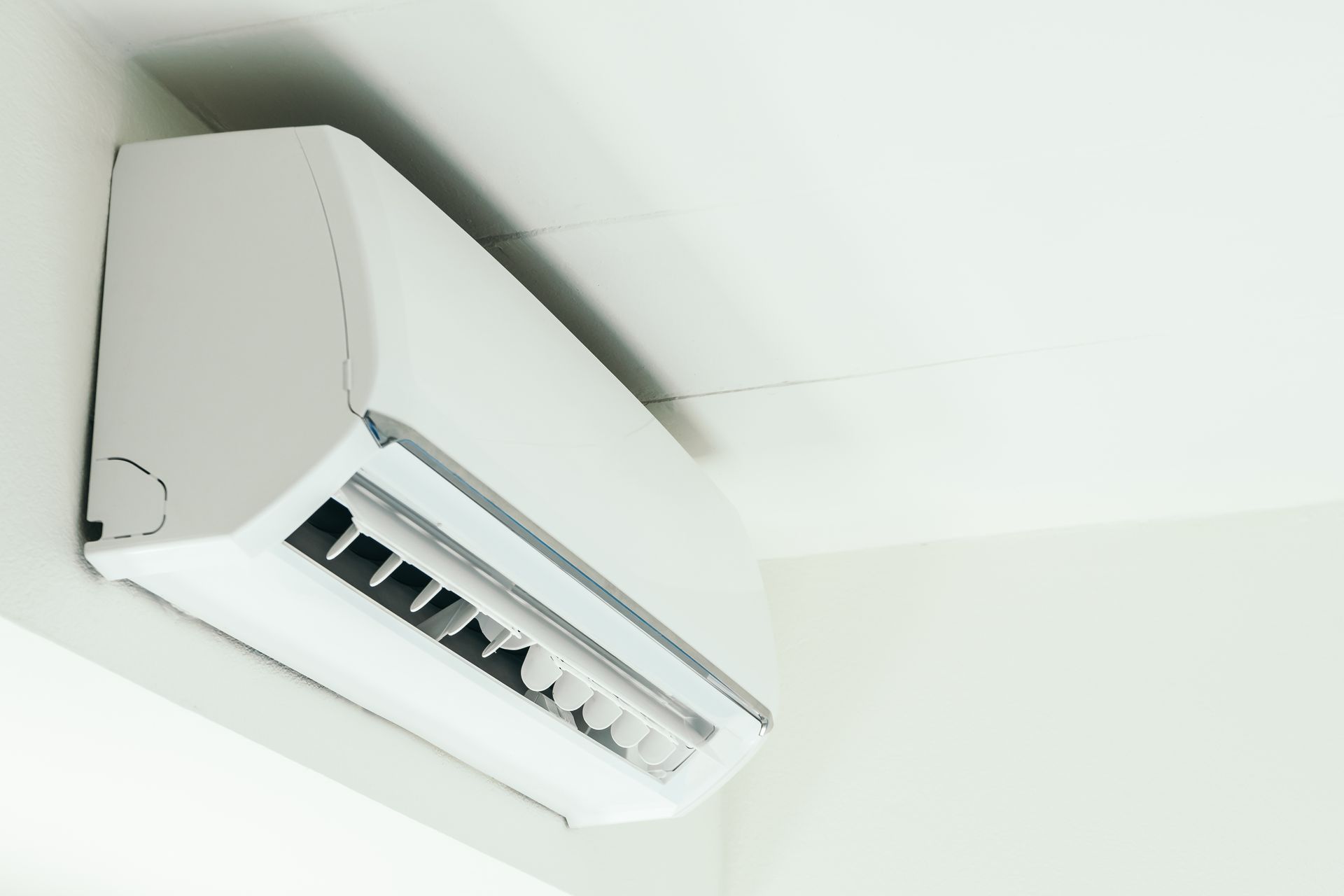
Table of Contents
- Introduction
- What a Mini Split Actually Is
- How the Refrigerant Cycle Works
- They Heat as Well as Cool
- Sizing, Humidity, and Why Bigger Is Worse
- The Musty Smell Problem
- Condensate Drainage
- Single Zone or Multi Zone
- Where the Heads Go
- Indoor Unit Options Beyond the Wall Mount
- Line Set Limits and Outdoor Unit Placement
- What Maintenance Actually Involves
- When a Mini Split Is the Right Answer, and When It Is Not
- Conclusion
- Book a Mini Split Consultation
- Frequently Asked Questions
Key Takeaways
- A mini split moves heat between an outdoor compressor and one or more indoor heads through refrigerant lines, with no ductwork involved.
- Nearly all mini splits are heat pumps, so they heat as well as cool. In north Alabama they handle most of the heating season comfortably.
- Oversizing is worse in a humid climate than undersizing. An oversized unit cools quickly, shuts off, and never runs long enough to pull moisture out, leaving the room cool and clammy.
- Wall mounted heads keep a damp evaporator and blower wheel inside your living space, which is why musty odours are the most common complaint in humid regions.
- Heads drain condensate by gravity through the wall. A line that slopes the wrong way puts water down your interior wall.
- Multi zone systems share one outdoor unit, which means one failure stops every zone and small zones can short cycle on a large compressor.
- One head does not cool a floor plan. Air does not travel through doorways well enough to condition rooms the head cannot see.
Introduction
A mini split cools by moving heat out of your home rather than making cold air. An outdoor compressor and one or more wall or ceiling mounted indoor heads are connected by refrigerant lines running through a small wall penetration, and no ductwork is involved anywhere in the process.
That much is standard. What matters more for homes around Guntersville, Albertville, Boaz, and Fort Payne is what humidity does to the equation, because the decisions that make a mini split excellent in a dry climate are the decisions that make it disappointing in a humid one.
The short version: sizing matters more here than efficiency ratings do, because a unit that cools too quickly never removes moisture, and a cool clammy room feels worse than a slightly warmer dry one. And because the evaporator coil sits inside your living space rather than in a closet or attic, the maintenance that keeps it from smelling is different from what a central system needs.
What follows covers how the system works, what it does well, and the specific things worth getting right in this climate. If you are weighing options, the heat pump and mini split route suits some homes very well and is the wrong choice for others, and the difference is usually predictable in advance.
What a Mini Split Actually Is
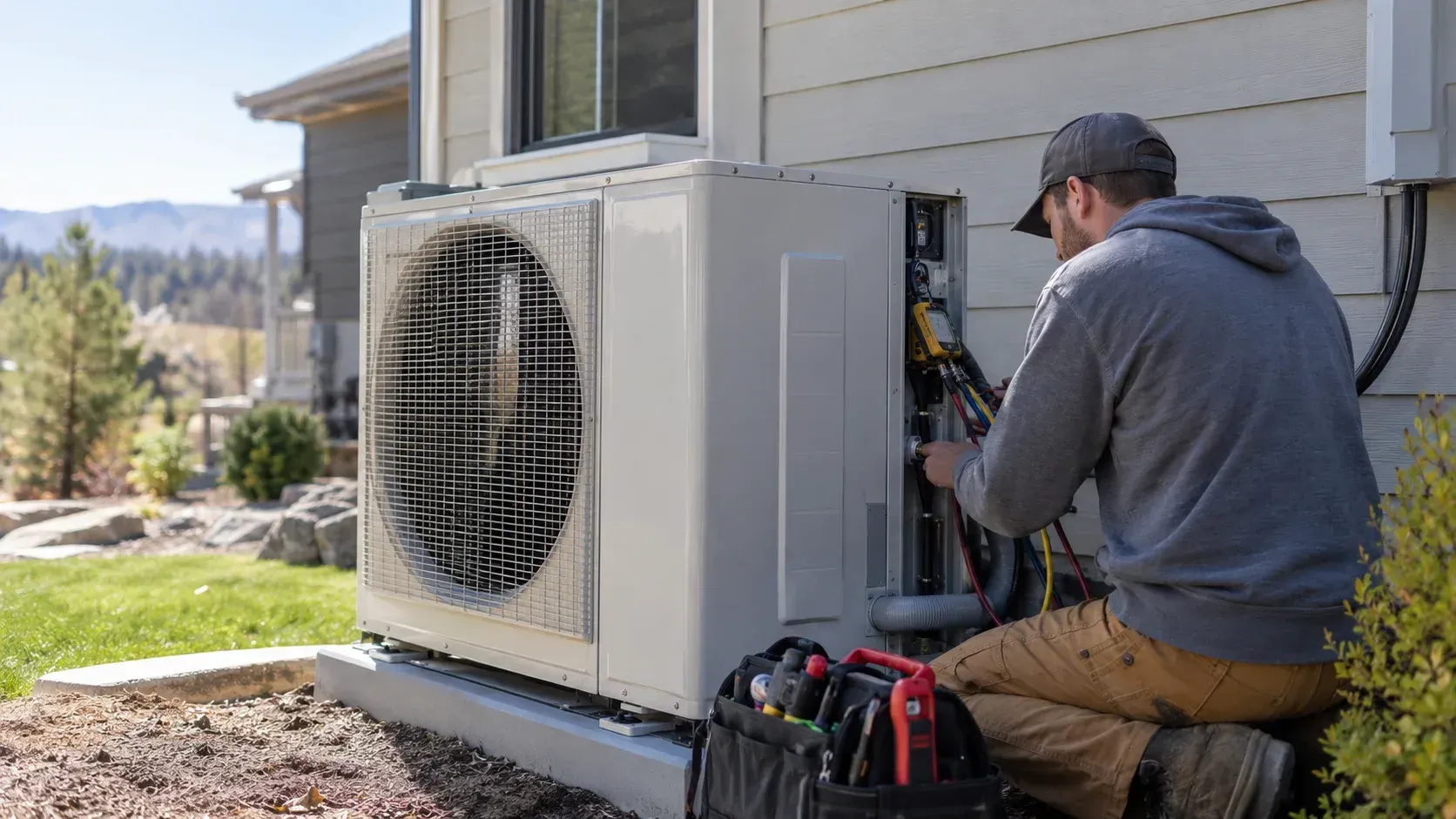
Two main components. An outdoor unit containing the compressor and condenser coil, and one or more indoor heads containing an evaporator coil and a fan.
Connected by a line set, meaning insulated refrigerant lines, a control wire, and a condensate drain, all running through a wall opening typically around three inches across.
Ductless is the defining feature. Conditioned air is produced in the room rather than delivered to it, which removes the duct losses that central systems contend with.
Common applications:
- Homes without existing ductwork
- Additions, converted garages, sunrooms, and finished attics
- A single room that is always too hot or too cold
- Detached spaces such as workshops and offices
- Homes where adding ductwork is impractical
What it is not. A mini split is not simply a smaller central system. The design tradeoffs are different enough that the same house can be well served by one and poorly served by the other, depending on layout.
How the Refrigerant Cycle Works
The mechanism, briefly, because it explains everything below.
- The indoor fan pulls room air across the evaporator coil.
- Refrigerant in that coil absorbs heat from the air, and moisture in the air condenses on the cold coil surface. This is where dehumidification happens.
- The refrigerant carries that heat outdoors through the line set as a low pressure gas.
- The compressor raises its pressure and temperature.
- The outdoor coil releases the heat to outside air.
- The refrigerant expands and cools, returning to the indoor coil to repeat the cycle.
The part worth understanding: cooling and dehumidification happen at the same coil, at the same time, and both require runtime. A system that reaches temperature quickly and shuts off has cooled the air without doing much to the moisture in it.
Inverter compressors are what make mini splits good at this. Rather than running at full output and cycling off, an inverter compressor varies its speed to match demand. It runs longer at lower output, which holds temperature steadier and, critically in this climate, removes far more moisture than a system that cycles on and off.
They Heat as Well as Cool
Worth stating plainly, because mini splits are frequently discussed as air conditioners and most of them are not.
Nearly all mini splits sold today are heat pumps. They reverse the refrigerant cycle in winter, pulling heat from outdoor air and moving it inside. Yes, there is usable heat in cold air, and modern units extract it well below freezing.
In north Alabama this matters. Winters here are mild enough that a heat pump handles the large majority of the heating season efficiently, and the way heat pumps perform through an Alabama winter is one of the stronger arguments for the equipment overall.
Practical implications:
- A mini split in an addition or converted space handles both seasons, so no separate heater is needed
- Heating efficiency is typically far better than electric resistance heat
- Performance declines as outdoor temperature drops, though the units are rated for temperatures well below what this region sees
- Defrost cycles are normal in cold damp conditions, and the outdoor unit will occasionally steam and pause
If you are only thinking about summer, you are evaluating half the value.
Sizing, Humidity, and Why Bigger Is Worse
The most important section for this climate, and the opposite of the instinct most homeowners have.
Oversizing is the common error, and it is worse than undersizing in a humid region.
Here is why. An oversized unit satisfies the thermostat quickly and shuts down. Short runtime means little contact time between room air and a cold coil, which means little moisture removed. The room reads seventy two on the thermostat and feels clammy, because relative humidity is still high.
The symptoms of an oversized mini split:
- Cool but damp feeling air
- Frequent starting and stopping rather than long steady operation
- Temperature swings
- Musty odours, since a coil that gets wet and then sits idle grows biofilm
- Condensation on windows and surfaces
- Higher bills than expected, since starting is the least efficient part of the cycle
A correctly sized unit runs longer at lower output, holds temperature steadier, and pulls far more moisture out of the air. This is exactly what inverter technology is designed to do, and oversizing prevents it from doing it.
Sizing should come from a load calculation, not from square footage alone. The calculation accounts for insulation, window area and orientation, ceiling height, air leakage, occupancy, and which direction the room faces. Two rooms of identical size with different sun exposure need different equipment. There are real consequences to getting HVAC sizing wrong, and in a humid climate they show up as comfort problems rather than capacity problems.
Use dry mode when appropriate. Most mini splits include a dehumidification mode that runs the fan slower to prioritise moisture removal over temperature drop. On a mild humid day, that is often what the room actually needs.
The Musty Smell Problem
The most common mini split complaint in the Southeast, and the maintenance section of most articles does not address it.
Why it happens. The evaporator coil and the blower wheel inside the head get wet every time the unit runs, because that is where moisture condenses. In a humid climate they stay damp. Dust and organic material settle on wet surfaces, and biofilm and mould grow there. Unlike a central system, where the coil sits in an attic or closet, this is happening inside the room you are sitting in, a few feet from your face.
What it smells like. A sour or musty odour, usually strongest in the first minutes after the unit starts, sometimes described as dirty socks.
Why rinsing the filter does not fix it. The filters are the accessible part, and the growth is behind them on the coil fins and inside the blower wheel. Cleaning those properly requires partially disassembling the head, protecting the room and the electronics, and using a coil cleaner appropriate to the equipment. It is a service task rather than a homeowner task, and it is one of the reasons a professional mini split cleaning differs from a central system tune up.
What reduces it:
- Correct sizing, so the unit runs longer and the coil dries out during operation rather than sitting wet
- Using the fan delay or self drying feature if your unit has one, which runs the fan after shutdown to dry the coil
- Regular filter cleaning, which keeps material off the coil in the first place
- Annual professional cleaning of the coil and blower wheel, which is the part that actually addresses established growth
- Running the system regularly rather than leaving a head idle for months
If it has already set in, it needs proper cleaning rather than an air freshener or a filter change. The same principles apply as when removing mould from an air conditioner generally, with the added complication that the unit is mounted on your wall.
Condensate Drainage
Every unit of moisture the system removes has to go somewhere, and in a humid climate that is a meaningful volume of water.
How it works. Condensate collects in a pan under the evaporator coil and drains through a small tube in the line set, running through the wall to the outside by gravity.
What goes wrong:
- The line does not slope consistently downhill. Any rise or sag holds water, and the pan overflows into the room.
- The head is not mounted level, or is mounted with a slight tilt in the wrong direction.
- The line gets blocked by biofilm, dust, or insects, which is more common in humid conditions.
- The exterior termination is poorly placed, discharging against the foundation or across a walkway.
The symptom is water running down the interior wall beneath the head, which is both alarming and damaging. It is nearly always a drainage problem rather than a refrigerant problem.
Where gravity drainage is not possible, for example a head in a basement or below the exterior grade, a condensate pump is required. Pumps are an additional component with a service life and a failure mode, so it is worth knowing whether your installation has one.
Maintenance: the drain line should be flushed periodically, and the exterior termination should be checked for blockage. This is routine and it prevents an expensive interior repair.
Single Zone or Multi Zone
A real decision with real tradeoffs, and one the standard overview does not present.
Single zone. One outdoor unit paired to one indoor head. Simplest arrangement, generally the most efficient, and a failure affects only that room.
Multi zone. One outdoor unit serving several indoor heads, often two to five.
Why multi zone appeals: one outdoor unit instead of several, which means less exterior clutter, one set of electrical connections, and usually lower installed cost than the equivalent number of single zone systems.
The tradeoffs worth knowing:
- One point of failure. If the outdoor unit goes down, every zone stops. With single zone systems, a failure affects one room.
- Minimum capacity issues. A large outdoor unit serving one small head calling for cooling may not be able to modulate down far enough, so it short cycles. That brings back the humidity problem described above.
- Simultaneous heating and cooling is generally not possible on standard multi zone systems. If one room wants heat and another wants cooling, the system cannot do both.
- Efficiency is usually lower than an equivalent single zone pairing.
- Complexity in diagnosis when something goes wrong.
The practical guidance: multi zone works well when the zones are reasonably similar in size and are used at similar times. It works less well when one small zone will frequently be the only one running.
Where the Heads Go
Placement determines whether people are happy with the system, and it is decided at installation.
One head does not condition a floor plan. This is the most common disappointment. A head in the living room does not cool the bedrooms down the hall, because air does not move through doorways well enough to condition rooms the head cannot see. If you want a bedroom conditioned, that bedroom needs a head or a duct.
Throw distance matters. Each head has an effective range. A long open room may need placement at one end rather than in the middle, or may need two heads.
Do not aim it at people. A head blowing directly onto a bed or a seating area produces complaints regardless of how well the system performs. Placement should let the air distribute rather than target.
Clearance requirements apply above and to the sides of the head for proper airflow, and manufacturers specify them.
Consider the drain run when choosing a location, since gravity drainage is much simpler on an exterior wall.
Height. Wall units generally mount high, which suits cooling since cold air falls. It is less ideal for heating, since warm air rises, which is one argument for floor mounted units in spaces used mainly in winter.
Think about the line set route to the outdoor unit. A head on the far side of the house from the outdoor unit means a long line set, exterior line covers, and possible capacity loss.
Indoor Unit Options Beyond the Wall Mount
Most people picture the wall mounted head and do not know the alternatives exist.
Wall mounted. The standard, least expensive, easiest to install and to service. Visually prominent, which some people object to.
Ceiling cassette. Recessed into the ceiling with a flush grille, distributing air in multiple directions. Much less visually intrusive, needs adequate space above the ceiling, and costs more.
Floor mounted console. Sits low on the wall, similar to a radiator. Better for heating dominated spaces since it delivers warm air at floor level. Useful where wall space up high is unavailable.
Slim ducted or concealed. A small air handler hidden in a closet, soffit, or above a ceiling, feeding two or three rooms through short duct runs. This is the option almost nobody mentions and it is frequently the right answer, because it gives you ductless system efficiency and zoning with conventional looking ceiling registers and nothing visible on the wall. It also solves the one head does not reach the bedrooms problem.
Mixing types is allowed on most multi zone systems, so a concealed unit for the bedrooms and a cassette in the living area is a workable combination.
Line Set Limits and Outdoor Unit Placement
Manufacturers specify maximum line set length and maximum vertical separation between indoor and outdoor units. Exceeding either reduces capacity, and long runs often require additional refrigerant charge beyond the factory amount.
This constrains layout. An outdoor unit tucked out of sight around the far corner of the house may put the line set beyond the practical limit for a head at the opposite end.
Outdoor unit placement:
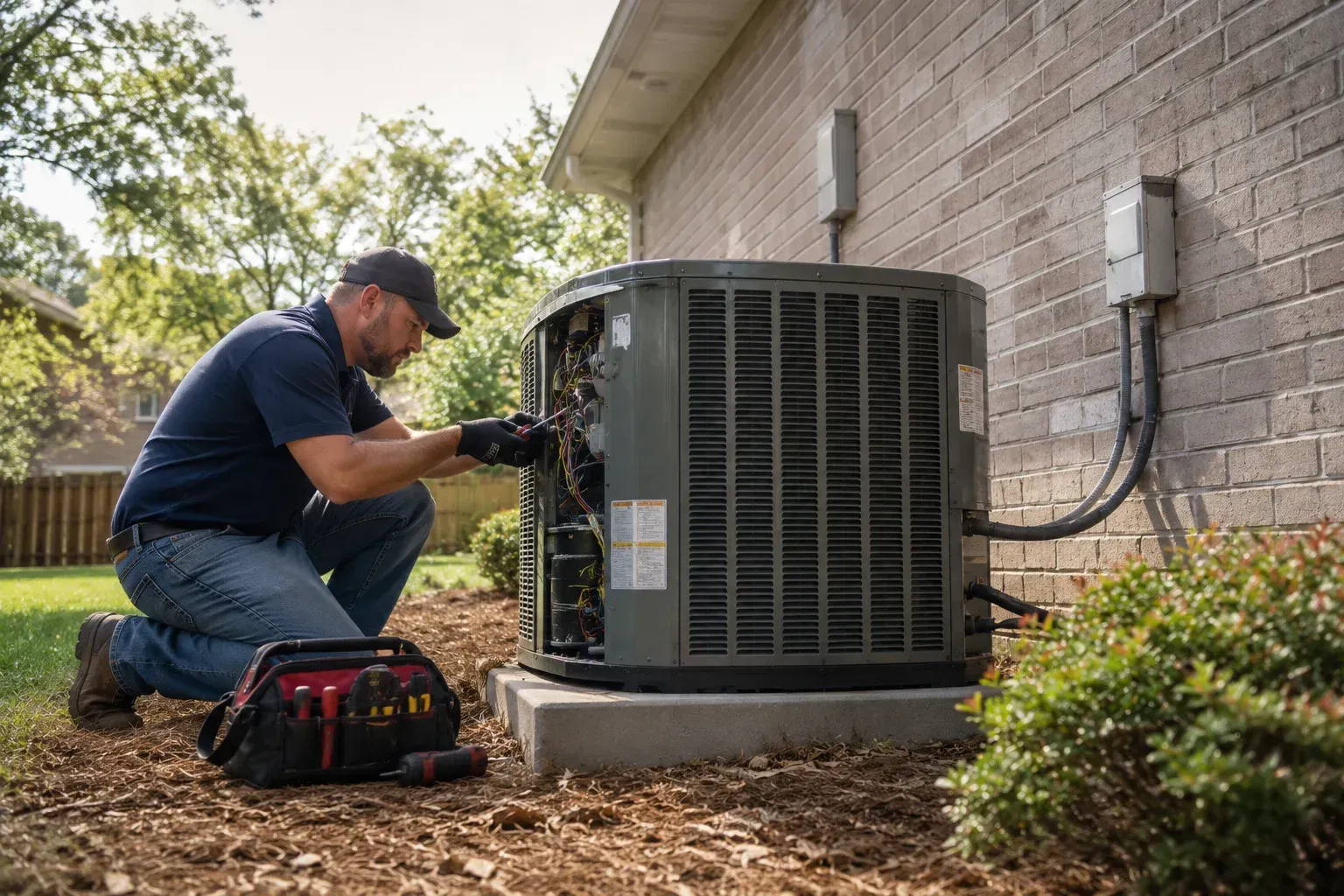
- Clear airflow around it, with manufacturer specified clearances
- Elevated slightly off grade so it is not sitting in standing water or debris
- Not directly under a roof edge that dumps water on it
- Away from bedroom windows and patios, since it does make noise
- Accessible for service
- Somewhere the coil can be rinsed periodically
Line covers. Exterior line sets should run in proper covers rather than being left as exposed insulated tubing. Bare insulation degrades in the sun, and the appearance is poor.
What Maintenance Actually Involves
More than the filter, which is where most guidance stops.
Monthly to quarterly, homeowner:
- Remove and rinse the washable filters, let them dry fully before reinstalling. In dusty conditions or with pets, more often.
- Wipe the housing and the visible louvres.
- Check that nothing is blocking the outdoor unit.
Annually, professional:
- Evaporator coil cleaning, which is the item that prevents odours
- Blower wheel cleaning, which most homeowners do not know exists and which collects a surprising amount of material
- Condensate pan and drain line flushing
- Refrigerant charge verification, since an incorrect charge affects both capacity and dehumidification
- Electrical connection checks at both units
- Outdoor coil cleaning
- Verification of drainage slope and the exterior termination
In this climate, twice yearly is reasonable on systems used heavily in both seasons, particularly given the moisture load.
Signs something needs attention: reduced airflow, a musty smell, water anywhere near the head, ice on the refrigerant lines, longer runtimes for the same result, or the unit tripping its breaker.
When a Mini Split Is the Right Answer, and When It Is Not
Strong fit:
- A home or space with no ductwork
- Additions, converted garages, sunrooms, finished attics and basements
- One room that has never been comfortable
- A detached workshop or office
- Homes where installing ductwork would mean major construction
- Supplementing an existing system in a problem area
- Anywhere you want genuinely independent room control
Weaker fit:
- Whole home replacement where good ductwork already exists. Central equipment is usually more economical per unit of capacity in that situation.
- Homes where visible indoor units are unacceptable and the budget does not extend to cassettes or concealed units
- Very open floor plans that a small number of heads cannot cover evenly
- Situations where the head cannot be placed sensibly relative to drainage and the line set route
On cost. Mini splits are generally more expensive per unit of capacity than central equipment. The economics work when there is no ductwork to use, when ductwork would be expensive or destructive to add, or when the alternative is conditioning a whole house to fix one room. Comparing the installed cost against extending ducts is a reasonable exercise before deciding.
Conclusion
Mini splits work by moving heat rather than generating cold, using refrigerant lines between an outdoor compressor and indoor heads with no ducts in between. Nearly all of them are heat pumps, so they cover both seasons, which in north Alabama makes them a year round solution rather than a summer one.
The thing to get right in this climate is sizing, and the instinct to go bigger is the wrong one. An oversized unit cools fast, shuts off, and never runs long enough to remove moisture, which produces a cool clammy room, a coil that stays wet, and eventually the musty smell that generates most mini split complaints in the Southeast. Correct sizing lets the inverter compressor do what it was designed to do, which is run long and low.
The two maintenance items that matter most here are also the two most often skipped. Annual cleaning of the evaporator coil and blower wheel inside the head, and keeping the condensate drain flowing. The first prevents odours, the second prevents water on your wall.
Book a Mini Split Consultation
If you are considering a mini split for an addition, a problem room, or a home without ductwork, the questions worth answering first are what capacity the space actually calls for, where the head can sensibly go given drainage and the line set route, and whether a concealed ducted unit would suit better than a wall mount. You can get in touch through our contact page or call (256) 572-9630.
Serving Guntersville, Albertville, Boaz, Horton, Fort Payne, and Blount County.
Frequently Asked Questions
How does a mini split work?
An outdoor compressor and indoor heads are linked by refrigerant lines through a small wall opening. Refrigerant absorbs heat from room air at the indoor coil and releases it outside. No ductwork is involved anywhere in the process.
Do mini splits dehumidify?
Yes, at the same coil that cools, but only while running. Oversized units cool fast and shut off, removing little moisture and leaving rooms cool but clammy. Correct sizing and dry mode both help considerably.
Why does my mini split smell musty?
The evaporator coil and blower wheel inside the head stay damp and grow biofilm, which is common in humid climates. Filters are not the cause. It needs professional cleaning of the coil and blower wheel rather than a filter rinse.
Do you need one mini split per room?
Each room you want conditioned needs its own head, since air does not move through doorways well. A slim ducted concealed unit can serve two or three rooms through short duct runs if separate heads are undesirable.
Are mini splits cheaper than central air?
Usually more expensive per unit of capacity. They make financial sense where there is no ductwork, where adding ducts would be costly or destructive, or where the alternative is conditioning a whole house to fix one room.
Related Posts